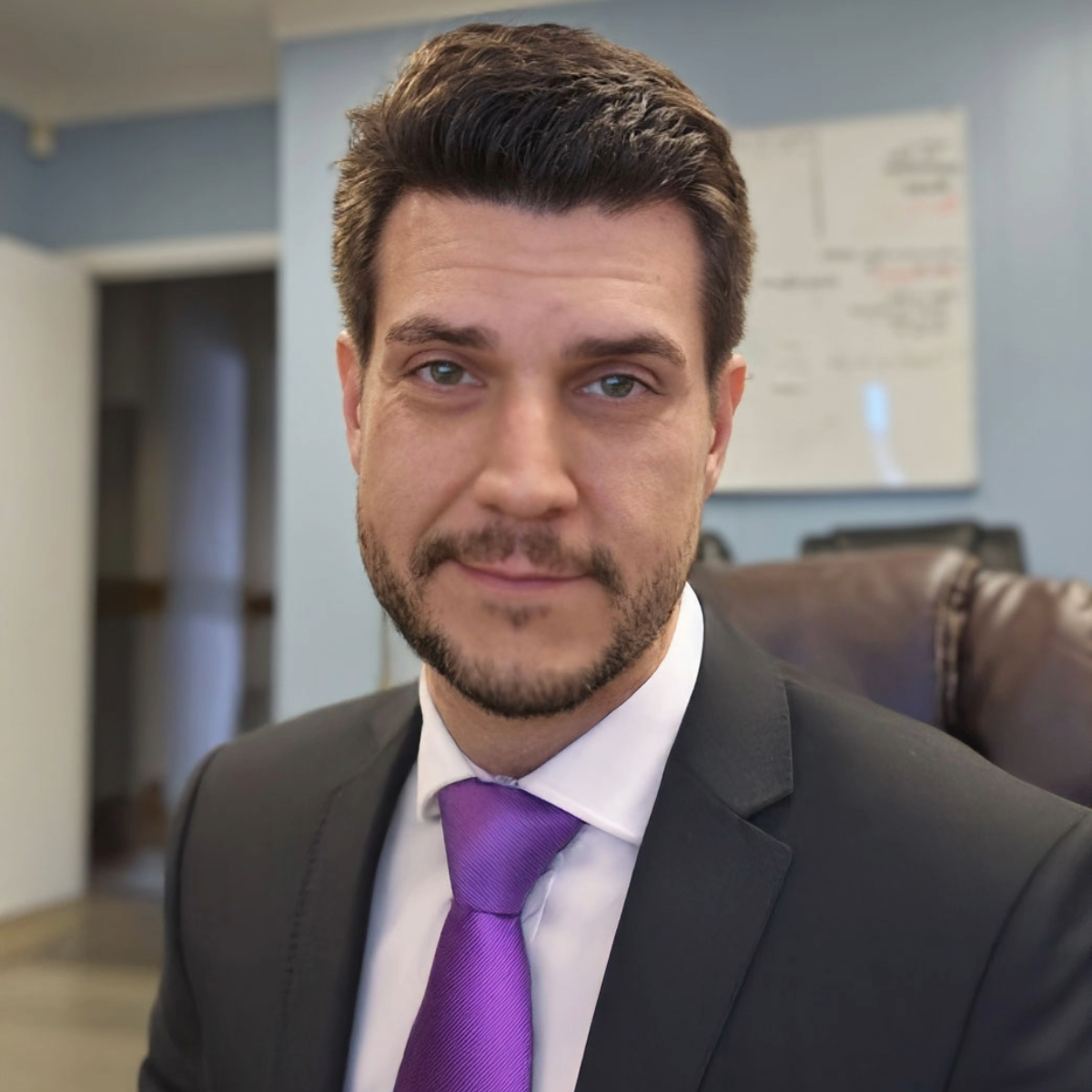
[00:06 - 00:24] Rob: Welcome back to the Evolution of Dental Podcast, brought to you by Evolution Dental Science, where we share the stories of the people and the technology reshaping the world of dentistry. Today's guest is the president of the AACD, a photography extraordinaire, Doctor Notarantonio, better known as Elvis. How are you today?
[00:25 - 00:27] Adamo: I'm doing well. Thank you for having me, I appreciate it.
[00:28 - 00:34] Rob: Thank you for being here. Thank you for being a part of this. So tell me, why should every doctor be taking pictures?
[00:35 - 01:59] Adamo: Well, I mean, this conversation could go for hours, but I'll try to sum it up quickly. Honestly, if you asked me what one tool in my dental practice I could never work without, it's a digital camera. And, you know, I obviously teach style photography, but when we talk about it, some of the things that we focus on such things as lab communication, patient communication, unfortunately, in today's day and age, I have to say legal support because we need to document what we do, which is kind of sad, but it's the truth. For me, self assessment is huge. I mean, seeing work that I did 20 years ago versus work that I did now, and being able to see that documented, to see how bad I really was 20 years ago, as opposed to how much I've improved now, I think that's huge. But, you know, I think the main part, for cosmetic dentistry, is lab communication. You know, I work with ceramists all over the world. I actually don't work with, well, probably even them out, but I work with one in Istanbul, Turkey. I work with another in Guayaquil, Ecuador. And you know, they're not coming to my office to do a shade match with me. So in order to get things right, you know, the camera is a mainstay for me. From diagnosis to smile design to lab communication. I don't think I could be half the dentist I am, maybe even a quarter of the dentist I am, without that tool in my arsenal.
[02:00 - 02:08] Rob: What do you think makes the best photos? Like, what's a technique or something that you bring to it that you think is probably one of the more important aspects of it?
[02:08 - 03:00] Adamo: You know, it's really not all that complicated. And you don't need the fanciest of equipment, all these new mirrorless. I mean, you can get a standard dSLR camera. with a nice macro lens and a very simple flash for under $1,500. And if you think about that investment versus your long term ROI or loss of ROI in a chair, if you don't communicate well, I mean, it pays for itself in one unit, in my opinion. So, you know, a lot of people try to make it so hard with all these funky gadgets, I mean, I'm a bread and butter photographer. I do like my artistic stuff, don't get me wrong. Which I do a lot, but that's not for lack of communication, patient communication. The simpler you keep it and the easier the foundation, you know, I think, it's just better. There's too much out there. Everybody tries to overcomplicate it, and I try to keep it as simple as possible.
[03:02 - 00:03:07] Rob: Over-complicated, what are some things about, what are some things people do that over-complicate, do you think?
[03:08 - 04:02] Adamo: You see on social media all these fancy pictures or all these little gadgets that you put on the end of flashes and stuff. But people don't realize that when it comes to lab communication or smile design, or taking a digital scan and importing it into a photo, which is a big deal now, they'll hurt you, right? Because they don't capture things properly. They warp teeth, they don't allow light in certain areas, and you can't really put a digital scan in an area where you can't see. So, you know, yes, it looks cool to see, you know, a very famous doctor on Instagram with a camera that looks like Batman with these things all over it. And that's great for social media posts or your website or the artistic side. But for the bread and butter stuff, it actually hinders you, which I don't think many people realize. And unfortunately, that’s the problem with social media, right? You see it and you think that it's viable, but unless you're educated in it a lot of that stuff can hurt you more than help you.
[04:03 - 04:11] Rob: Yeah, it's like watching TV. You know, just because it's on TV doesn't mean that's how you should live. Just because they did it in the TV show doesn't mean you can actually make that jump in your car.
[04:11 - 04:13] Adamo: Exactly, exactly.
[04:14 - 04:24] Rob: So it sounds like you're also doing a lot of SmileCreator, right? Does that sound right? You're using a lot of the photos to match up with your STL or colored intraoral scans?
[04:24 - 05:25] Adamo: Yeah, yeah. You know, as I do a lot of cosmetics in my office, so a lot of veneers, a lot of full mouth reconstructions and stuff like that. And, you know, you have to start by putting teeth in the face properly to make it look good. And then, you worry about the function and apply the function after. So you know, my main photos on my photo series that I take for every, either smile design or mouth recreation, if you want to call it. You know, they’re simple, they’re standard, but they have to be taken properly because if you take a headshot of a person and you're trying to take their pre-op scan of their teeth, import it into that, and then redesign a smile or an occlusal scan. If you have the head tilted off 5-10 degrees, you'll ruin the whole entire thing. And I don't think people realize how much a little bit can really throw off an entirety. And if you're talking about doing 30 teeth, 2 millimeters is a whole lot of space, and a lot of mistakes. So, yeah, it's super important to get those basic smile design photos right. Otherwise the rest of the train just is going to fall off the tracks.
[05:26 - 05:30] Rob: Yeah, just a couple degrees difference, it makes a whole new remake situation.
[05:31 - 05:32] Adamo: 100%, 100%.
[05:33 - 05:40] Rob: What's the saying? It's, if you take off from LA, it's like three degrees, maybe five degrees difference between landing in New York versus DC.
[05:41 - 05:45] Adamo: Yeah. It's crazy, it's crazy. It's true, it's very true, very true.
[05:46 - 05:52] Rob: So have you always had photography incorporated into your practice or is that something that you fold in over time?
[05:53 - 07:07] Adamo: Yeah, you know, when I started in practice, I started in a fee-for-service practice. I got very lucky with my first associateship and my boss at the time, who then became a partner, was pretty advanced with technology and photography. So, yes, I had basic knowledge. And then when I went through AACD accreditation, I would say my photography game upped a lot there. And then when social media happened, I started to develop the artistic side of doing things like lip art and stuff like that. So yeah, it has been a constant evolution through my career, but basic photography was always a part of what I did because of what I walked into. And like I said, I was very fortunate with my associateship. So, you know, I know not everybody has that. So when they see it, it could be very overwhelming to them. The funny thing is, it's so easy. It's kind of frightening. So I hope if whoever's listening to this and is terrified of photography, well, maybe I can sway you to believe me and hopefully come and see us one day to up your photography game, because it's the number one tool I have. You could give me any handpiece, any composite, any anything. I'll make it work. A camera, you can't take away from me.
[07:08 - 07:11] Rob: Sounds like you had some pretty good mentors going into this too.
[07:11 - 08:39] Adamo: Yeah, I did, I did. Actually my first, I would say “real” mentor for me who really took me under his wing, one general dentist. He practiced a mile away from me by the name of Gary Alex. He was phenomenal to me. For some reason he took a liking to me, guided me in where I should go to learn occlusion and function, and then took me to my first AACD meeting. And then over time, you know, I went through the Dawson Academy. So Pete Dawson was a mentor of mine with, you know, some of the faculty, they had their John Cranham, DeWitt Wilkerson Glen DuPont. And then I started on my journey at the Kois Center. I'm faculty here now, so I'm actually here teaching this week. That's why I have the Kois Center logo on. I’m in their back room, hiding from the rest of the place. But John has been a mentor to so many. You know, to me, he's changed the way dentistry is looked at. The way dentistry is done for so many years, you know. We had a new instructor come this morning to help with the rest of the week. And I think when John introduced her this morning, she said something really amazing to me and I think we all, everyone that's gone through this will say John not only changed us professionally, he's changed us personally. So he's had a huge impact on me as a human being. And I owe so much to him. And, and I know if you ask any Kois mentor or clinical instructor, anyone who's been through it, they’ll all tell you the same thing. He's just a one of a kind unicorn, special human being.
[08:40 - 08:49] Rob: That's incredible. What have some of those impacts been? Like, can you share any stories related to that or how it’s changed how you practice or look at dentistry?
[08:49 - 10:39] Adamo: Yeah. I mean, you know, when we come out of school we're basically mechanics, right? We learn to fill holes and to fix things that break. But we never really understand why they broke or why that hole happened. And John has really put together a curriculum for doctors. I would call it an after school residency, where it's more focused on the diagnosis and why this happened and then treating the problem, you know. The same thing is in medicine, if you think about it, we go to the doctor and say, I have, my chest hurts and I, I'm having trouble breathing. And it's a prescription. Right. But what if there's something underlying that's been causing that and why you get sinus infections every three months and you could just Band-Aid everything with meds, and we could Band-Aid everything in the mouth. But John teaches us to look at it as a healer, right? Not as a mechanic. And I think it was eye opening to me where I was like, oh, my God, I never even thought of that. And he's really spent, you know, 30 plus years coming up with systems to evaluate a patient's medical history and how that relates to their dental history and how they answer some questions. And before, I think a patient would say, I broke a tooth and I would look and see the break or fix it. And now when they fill out the forms that we use in the office, I pretty much know what the mouth is going to look like before I even get in it. Because, you know, after doing that so many times in the way he has systematically put it together. It's been life altering. So I think that would be the biggest thing. You know, I don't look at teeth as I am just a mechanic fixing things when they break, you know, there's so much that goes on that affects systemic health as we know now, especially now with the recent craze with airway and sleep and all that stuff. But it's all related. And I think John has done the best job I've ever seen showing us that.
[10:40 - 10:45] Rob: So getting down to the root cause of the issue as opposed to treating the actual symptoms.
[10:45 - 11:48] Adamo: Yeah. Because you could, if somebody destroyed their mouth per se, I could rebuild it and make it look very beautiful. But if I don't fix why it broke, guess what? You know, my porcelain work is never going to be better than what God put in the mouth originally, which is enamel. So if they could destroy that, they're going to destroy everything I did anyway. So that I think is a huge problem. So that's the number one thing. And then I need to communicate with my lab. Okay. These teeth are worn. I want to put them in. I'm going to do orthodontics to put them here. But then I need to rebuild them. And I want the front teeth this long. I want them this wide. If I just tell them that, they can't comprehend it. Right. So I need to physically show them this is where I want the edge. You can only do that on a picture if we're communicating like you and I are, over a computer. Right. So that's been the big thing with photography it’s being able to communicate with patients and also with my lab tech to really find out why, show them why, have them accept the proper treatment, and then go ahead and do the design.
[11:49 - 11:50] Rob: Teamwork makes the dream work, right?
[11:50 - 11:52] Adamo: 100%, 100%.
[11:53 - 12:07] Rob: Yeah. If you give your lab the right tools to work with, the right inputs to work with, then you can really collaborate together and come out with- It sounds like you've built quite a community based on this, this ethos. Is that something you brought to an AACD?
[12:08 - 12:59] Adamo: I mean, listen, I'm not going to say I brought anything to anybody, the AACD was around way before me, you know, obviously it's evolved over the years. And I think it'll continue to evolve, like dentistry has evolved from analog to digital, and then God knows where it's going to go with AI and all that fun stuff. So, you know, listen. I've learned a lot over the years as an educator. You know, I love to teach and try to elevate. So I've obviously spoken plenty of times at AACD and I have been a big part of the organization. So if I helped and motivated any young person, even one, then I've done my due diligence as now somebody who is in the second half of the career, mentoring people as opposed to people mentoring me, which I was blessed to have. So I just, you know, I enjoy giving it back.
[13:00 - 13:33] Rob: That's beautiful. So, during the course of doing your lectures and courses, what have you learned and taken away from that yourself? Because something that I always continue to learn is teaching people exocad, you take stuff away from it yourself. You encounter all kinds of things you might not have otherwise in your own practice or your own lab. What are some examples of things that you've taken away from training and teaching photography, and preaching the gospel of photography that has really influenced how you both teach people and implement it in your practice?
[13:33 - 15:19] Adamo: Well, I think that's the best point. You know, I think there’s a very big difference between a speaker and an educator. Listen, I could stand on stage all day and I'll show you some beautiful dentistry because I know that I have it right. Going through accreditation and fellowship, I have hundreds of cosmetic cases that are, in my eyes, super pretty, but did I teach you anything? Right. So an educator makes you go home on Monday with 500 tips that you can apply Monday morning. A speaker wowed you. And I think over time, and I learned the hard way, I remember the one lecture that made me change everything I do about speaking because it was the most humbling experience ever. And I stopped being a speaker and I started to be an educator. So most of the stuff I show when I lecture is failures. I don't- I mean, I show nice dentistry, but I also show everything that's gone wrong because I feel like that's what's going to make you a better person, to learn from my mistakes, as did my mentors. So, yeah, I think that was the biggest thing over the years. And I learn every time I speak because, you know, an attendee or a student, they’ll ask you a question and you're like, you gotta think for a second, cuz, you never got asked that question and you have to on-the-spot come up with a solution. So that's the other thing, I learned to think fast. And that applies to clinical dentistry too, because not everything works out really good in the chair. So when it goes wrong, I think the difference between a good clinician and a great clinician is a great clinician can kind of MacGyver things for, I guess the younger generation might not know who MacGyver is, but MacGyver things and get out of, get out of trouble. And I think that's what's helped me over time.
[15:21 - 15:44] Rob: …Yeah, those humbling experiences go a long way. You show me a man who's never lost. I'll show you a man who's never learned anything in his life. And so, in light of that, what are some- You sound like you've incorporated a lot of the technology in your practice as well. What's some of the technology that you feel like adds to your practice? And what are some things that you feel like didn't quite deliver the way that they were promised originally?
[15:45 - 17:12] Adamo: I think that some things, some technology don't deliver as often as you might think. I love digital dentistry. I would say I'm probably 85% digital in my office. I do all of my smile designs digitally. I do most of my impressions digitally. I do all my implant stuff digitally, but I don't do any of my veneers digitally because I don't feel like those minimal prep stuff, it's ready yet, and that may be over time. So I feel like you have to have a combination and understand both. I think, you know, Pete Dawson said one of the greatest quotes I think I ever heard, and I think it's true. Unfortunately, with digital, once you start learning digital, and you never learn analog, his quote was, it's just, “It's amazing, but it's going to make you fail faster”. And it's true because if you don't really understand how to set everything up analog, you can't find those mistakes digitally. Digital covers you a lot, right? It can save you. So I think, I mean, I love the digital boom, but I think we have to take a step back, and really understand the basic concepts of occlusion and so on and so forth. Because if you don't, you're going to be in trouble. So I think that's where the balance needs to stay. And I hope that never goes away, because if it does, we're going to see faster failures than we've ever seen. If people are going straight from start to finish without understanding what road they have to take, it's going to be a big problem.
[17:15 - 17:17] Rob: That does sound like a pretty big shortcoming.
[17:18 - 17:54] Adamo: I don't think it's ever going to be completely 100% this, or completely 100% that because I think, you know, the evolution is great and it's helped me with so many- Digital is amazing, especially- I love doing dentures. It's scary, but one of my favorite things. Digital dentistry and dentures are amazing. I'm obsessed. But you have to also know how to do a regular denture, learn the muscles and where it goes. Because if you're relying just on the scanner and the design, it might not fit. And that's a big problem I've seen in that world as well, but that's a whole other story.
[17:56 - 18:05] Rob: Yeah. The scanner can’t always pick everything up, and really, it only picks up as much as you lead it to see. I mean, it's just a tool at the end of the day, right?
[18:05 - 18:06] Adamo: Very true, very true.
[18:08 - 18:37] Rob: And- if you're missing an area, then you can't pick that up without… getting an impression occasionally. Especially like you were saying earlier where you have a tissue covering up the margin, the prep goes deep, you know, subgingival like that. If it's physically obscured, it's an observational tool. Provided you have the right markers, what are some of the things you like? You do- you create your dentures with exocad. Is that correct?
[18:38 - 18:39] Adamo: I don't do the design. So-
[18:40 - 18:41] Rob: You don’t do any? Okay, gotcha.
[18:41 - 19:22] Adamo: No, I do my photos- Honestly, I've taken a course to do it. It's amazing. I just don't have time. I mean, I run and I'm very busy in my office in New York, and then I'm on the road almost every weekend lecturing. So I don't really have time to be designing anything. So, I scan and then I take my photos, and then I do the design with my designer, put my teeth where I want, and then they can go from there and move forward. I wish I had more time, I do enjoy the smile design part, but my life right now doesn't allow for me to. You know, any extra time I have I'd prefer being on the couch with a glass of wine, then designing a smile for the 20 minutes I have free a week.
[19:23 - 19:26] Rob: You said you like the smile design part of it. What about it do you like?
[19:27 - 20:29] Adamo: I mean, smile design is my thing, you know, being with the AACD and what we promote there. I just- enjoy creating smiles, changing people and the way they look, making them get the smile either that they used to have or the one they always wanted. You know, I think of all the dentistry we do, yes doing crowns and fillings to help people get out of pain is fun, but the one where you really see the joy is when you change their appearance. People love that, so I think it's a life changing thing. Smiles tell a lot, you know… I'm doing a case right now where I have a patient, beautiful girl, young girl, and never smiles at all. Lips together at all times. She's in temps now, she can't stop smiling because she's never seen that [many teeth]. And she loves them . And they're just temporaries; I can't wait till we put the finals in. So, to alter somebody's life like that or to bring that joy out, it's going to trickle down to everything else they do on a day to day basis. So, that part of dentistry makes it fun.
[20:30 - 20:36] Rob: Oh that's so beautiful to hear. Do you have any other cases that you can share with us? Any examples of situations like that?
[20:37 - 21:19] Adamo: Oh, I got thousands and thousands and thousands of before-and-after’s I can send you for sure. But yeah, I mean-
[21:19 - 21:20] Rob: Well what’s one that was particularly rewarding or challenging?
[20:48 - 22:07] Adamo: One that was particularly rewarding, I mean, challenging, I've had a good number. I remember one I did about, oh, man, it's got to be 12 years ago now. And this patient came in with- it was so bad. She had an acrylic, clear acrylic, almost like a night guard, but they glued them to her lower teeth because they couldn't figure out where they wanted- It was the weirdest thing I've ever seen. Like when she smiled-
[22:07 - 21:20] Rob: They glued them to her teeth?!
[21:21 - 21:56] Adamo: Yeah. It was like, it was impermanent because they couldn't get her bite with her existing upper denture. Her existing upper denture, you could see seven miles of pink so you knew this thing was fake. So I did upper denture and then two implants and a lower over the denture. And that lady didn't stop crying for like six months. She had never seen teeth like that. And this thing was crazy glued in on the bottom, it was the weirdest thing I've ever seen in my life. But yeah, stuff like that is, really, that one always sticks with me because I remember her when I didn't even know what I was looking at, but I was like, what the hell is this thing on the bottom of her mouth?
[21:56 - 21:57] Rob: That's… wow.
[21:58 - 22:13] Adamo: But the reward after it was great. And, she actually moved from where I'm from in New York and moved out to Oregon. And I got to refer to a Kois dentist who is very close to me. He follows up with her, and she's just awesome and happy and in a good place.
[22:14 - 22:15] Rob: Still happy and still loving it.
[22:16 - 22:17] Adamo: Still happy and still loving.
[22:18 - 22:25] Rob: That's quite a story. Who in their right mind looks at that and goes like yeah this is right. This is the right course. We can just glue this in place.
[22:25 - 24:05] Adamo: I mean listen, I know- I'm sure there are times when… And I did in my past when I got to the point where I'm like, okay, this is now beyond me. I don't know what to do with this person. But I wouldn't just do something just to shut them up and make them think it's okay because they don't know any better, right? So that's where I would be like, let me refer you to somebody who can help you because I'm at a loss for words. And that's okay. You know, I think again, you know, we go back to John and what he's taught us outside of dentistry. It's being honest, and doing the right thing. Yeah, we have one of the instructors here, Betsy Bakeman. This is a soft tissue course we're at right now. And, you know, when she first learned it and went back and did it on her first patient, she told the patient, I learned this, and, you know, but I didn't do it a hundred times. I've only done it once, but I'm confident I can do a good job for you, and they root for you when you do that. But when they know- they can feel it, when you don't know what's going on and what you're doing, oh they feel it inside for sure. So that little conversation of saying, hey, I've done it before, this is not my first time, I haven't done many, but I'm very confident I could do this for you. They want you to succeed because they believe in you. And I think that's a big thing. One of the things that John really pushes on us is to always, to be honest in our integrity and build our character. And that's why, I mean, he doesn't only change your life as a dentist, he changes it personally because that trickles down to the rest of your life. You know, when you keep honesty and integrity, and you're a good person. And, I haven't met one person that's come out of this tribe at the Kois Center that is not a good human being. And I think we all owe that to John.
[24:-06 - 24:09] Rob: It's interesting that you use the word tribe to describe it.
[24:10 - 25:12] Adamo: Yeah. I mean, it's exactly what it is. I could call. I could have a patient in Eugene, Oregon. And if there's a Kois dentist close, they'll do the favor if my patient needs something. That's just the way it is. Same thing with the AACD. The AACD family is great, too. Another great community. So, I mean, I've had patients away with temporaries and in other countries, and they're like, do you know? Yeah, I know someone there. Go see- and they help. It's kind of amazing. And you can't, you know, if a patient is in another state and something happens and they don't know the dentists, usually (and I'm not speaking for everybody) but a lot of times they're quick to talk about how bad what you did was so that they can keep it. And that's not cool. You know, even if there's a problem, never would I ever, ever speak bad of anybody else's dentistry because I wasn't in the chair when it was done. And God only knows how hard that patient might be to work on. So, that's the beauty of the tribe and the respect and what I feel the communities are most involved with.
[25:14 - 25:19] Rob: Keeping the team together, keeping the team on the same track, and supporting each other as opposed to tearing each other down.
[25:19 - 25:22] Adamo: 100%. Yes. And we see that all too much in this world.
[25:24 - 25:44] Rob: Truly, truly we do. And it sounds like what you've done is you've incorporated both the patient, your team with Kois, your tribe, with the AACD, and the labs are all on the same page there. It’s like just full disclosure, honesty. Here's our pictures. Here's our references, here's our goals, and everybody's on the same track.
[25:44 - 26:02] Adamo: Yes, 100%. Yeah. I mean, when you have a vision and how you're trained, then it's easy to communicate with someone. You know, their orthodontist takes this or a periodontist, even endodontists have come through the Kois Center, but everybody speaks the same language. Communication becomes very, very easy.
[26:03 - 26:11] Rob: Speaking of communication and the growing technology stuff, what are some things coming down the pipeline that you're excited about or even things you're not so sure about?
[26:12 - 26:51] Adamo: Yeah I’m going to be honest. I'm not on the AI train yet. I'm sure it'll evolve over time. But you know, just because AI says something's there or something is not, might not mean the patient doesn't need something. And I think, unfortunately, for patients who rely on their insurance heavily, I think it's going to help in certain parts, but then it's going to hurt in others because they're not going to allow treatment when maybe they need treatment to be healthy and happy, and functional. So I'm not sold on AI yet. I think it's going to have its benefits, but I think it's going to also do a little bit of harm that we're going to see.
[26:53 - 27:35] Rob: So that's actually an angle I hadn't heard before, but it makes a lot of sense. You’re saying like the insurance companies might look at it using their algorithms. And we already see issues with the insurance companies denying claims that, you know, are clearly evident that this patient needs this kind of treatment. And, so if I understand correctly, you're saying that it's possible that the AI might be running on the insurance and saying, no, no, no, no, he doesn't need this. That doesn't fit our financial model for these patients. But there's other technologies coming down the pipeline, that are AI related like design as well as like orthodontic treatment or even production workflows. Have you had much interaction with those? And what are your thoughts on that?
[27:35 - 27:52] Adamo: Yeah, I've only dealt with the AI smile design stuff. I do use one software that, you know, I could take a still photo of you smiling and design your smile in that photo, and then AI generate you having a conversation. And you could see what the teeth look like as you move. It's pretty wild. I think it's genius.
[27:52 - 27:55] Rob: Like the exocad TruSmile? Or something else?
[27:55 - 28:43] Adamo: Yeah, something like that. But this one is… I have Smilecloud. It's from a European company, basically the same thing. But yeah, it's pretty wild to show patients and I could do it on my- I take a photo of a patient, do it right on the computer in three minutes, and they see it, and that's usually enough. So that stuff is pretty cool. I haven't done any of the production stuff. I don't own my office anymore. I sold my office and I'm an associate now, about three years ago. So I don't do the business side anymore, which for me is good because I never really liked it anyway. But, you know, my life has gone about 50% practice, 50% educating, so I didn't have time or energy to put into the business side of the practice.
[28:45 - 28:47] Rob: Well it sure sounds like you enjoy the educational side of it though.
[28:47 - 28:50] Adamo: I do, I do, I do.
[28:51 - 29:00] Rob: What's been one of the more rewarding takeaways from that? Like some of the student feedback or processes or different particular lectures you've had that stand out in your mind?
[29:01 - 29:41] Adamo: Yeah. You know, I have a five course curriculum with Amanda down at Charleston. All of our courses are two-day and about 80% hands-on. That's why we built what we built. It is Monday morning, or you can go right back in on Monday. So I don't- I'm not going to be the one to teach occlusion and all that fun stuff. That's for people like John, who are way smarter than me and know that stuff better than I do, but I think I can, in the realm that I- that we focused on together, we can make you go home Monday a better dentist. And that's if I add any courses to my curriculum, that's what they get. That's what the focus is going to be, very hands on and very, you can do this tomorrow if you want.
[29:42 - 29:46] Rob: What is that like, what would be the top three takeaways, you’d think from your course?
[29:47 - 30:45] Adamo: Well, digital, with the photography course, you can start taking pictures on Monday. That's big. I would say another big one. I'm a big rubber dam guy. I use the rubber dam for everything and that's my favorite course to teach- There’s no tooth they can't use the rubber dam when they finish my course. So that would be number two for me. And then, you know. And for me, I would say my composite course. I think composite artistry, which is what we teach, is the staple to cosmetic dentistry, because if you can understand how to make a tooth out of plastic, then you can have a conversation with your lab on how they're going to make that tooth out of porcelain. Because a lot of times, if you don't understand them and you're strictly relying on the aesthetics of what your lab wants, not what you want. So those would be my top three things: good pictures, great isolation and how to basically create illusions to make teeth look like what you want them to look like.
[30:46 - 31:11] Rob: I think that's a very good observation as far as communicating with the lab. And if you can't accomplish it with your own materials, then how are they supposed to understand your vision? And then you're at the mercy of what they want and limiting your communication abilities. So where would be a good place to get started? I mean, obviously your course. But where would be a good place to get started exploring the idea of using composites as a restorative tool?
[31:12 - 32:18] Adamo: Yeah. I mean, there's so many areas. I mean, AACD is one. AACD is very composite heavy because of its minimally invasive, responsible esthetics. Two of the accreditation cases have to do with composites so that's where I learned some of my composite skills. There's Cosmedent, their company has 4 or 5 speakers at their center, they are amazing. Other lectures around the world, of course. Obviously, I'm going to say to myself and Amanda, I think we do a good job. So I think regardless of where you go, if you don't go home- it's like my photography course. I will tell you, I will set your camera for you. I will teach you how to take pictures. If you don't go home Monday and take a full photo series on at least one person a day for the next 30 days, you wasted all your time and money and you only came here for food and laughs. That's it. So all of our courses are designed that way, so that if you go home and practice- a rubber dam, I'll teach you how to rubber dam any tooth. But if you don't put a rubber dam on on Monday, what's going to happen? A week is gonna go by, it's going to sit in the box and you're never going to apply it. So you have to practice. You just have to do it.
[32:18 - 32:23] Rob: So take a course, learn from a master, practice and practice and practice.
[32:23 - 33:02] Adamo: That's it. There's no secret formula. There's no peptide, there ain’t nothing they're going to inject in you that all of a sudden you're going to be amazing. It's bread and butter skill. And bread and butter skill comes with practice. And, you know, one of my favorite books of all time, it's called Talent is Overrated. And it talks about how all these people that you think like Tiger Woods, he's not talented. Tiger Woods is not talented at all. Tiger Woods worked harder than any human ever did with a golf club in his hand. That's why he's done. And the same goes for anyone, and dentistry is no different. That’s what you should title this podcast: Dentistry is no different, hehehe!
[33:05 - 33:18] Rob: Haha! I like it, I like it. So as quickly as all this technology is moving and growing, it sounds like a lot of it comes right back down to some analog techniques and hand skills and practice.
[33:19 - 34:03] Adamo: Yep. Agreed. 150%. I mean, fortunately you yes, you can digitally design, but you also have had skills where you have to manipulate a substance, whether it's porcelain or wax, to understand that. Now when you take the mouse and you move the line angle out, you know what's going to happen to the tooth. What if you have a designer who doesn't even know what a tooth is supposed to look like, or what a line angle is? They don't know, right? So how am I going to communicate with them and say, man, the front teeth look skinny. Well, if they don't know how to fix it and you don't know how to fix it, we're in big trouble here, right? So your designer as well as you have to be able to understand all those little nuances. And again, for me to do it with my physical hands is the only composite left. There's really not much wax around.
[34:06 - 34:14] Rob: Yeah. And the composite though, again it being, there's an ROI built into the composite if you develop that skill.
[34:15 - 35:10] Adamo: Yeah. And listen, I’ll say a bold statement: I think the ROI is bigger than porcelain. For sure. By far. If you get to a level where you're skilled enough that you can charge at a very appropriate fee, I could do six for positive veneers in one visit. To do six porcelain veneers, I need five visits, so I could do it in an hour and a half. Whereas if you add up all the hours it takes me to do six porcelain veneers, both in the chair and out of the chair, I'm at 12, 13, 14 hours. It's ten times, I'm not charging ten times my composite fee for my porcelain, minus the lab. So for me, ROI is way bigger on a composite artistry or composite veneer case than it is on porcelain. For sure. People love porcelain. Why? Social media makes it sexy. But let's talk about making money for a second. I make way more money on my composite veneers than I do my porcelain.
[35:12 - 35:16] Rob: Yeah, it sure sounds much more effective. Time sensitive as well.
[35:16 - 35:18] Adamo: Well you got to get to that point. Hehe.
[35:19 - 35:19] Rob: Yeah, yeah.
[35:20 - 35:35] Adamo: Yeah, that doesn't happen right out of school. But again, develop your skill, master it. And, you know, there's a reason I can do them in an hour and a half. It's because I've done 20,000 of them, both on plastic and on a person. Not because, you know, I'm this gifted human with amazing hands. That's not the case. That's not the truth.
[35:37 - 35:41] Rob: Do you have a favorite material or favorite workflow to do your composite?
[35:43 - 36:14] Adamo: I do have a favorite material. It's funny everybody asks that and I'm like, I could literally send you my material and you're never going to pull off composite veneers like I can. I base my material basically on how the feel of it is, so I don't like it too stiff. I like a little creamier composites on my system. All of these companies make beautiful composite materials. Now the technology is- I just use one because I like the way it handles, so I'm not going to heat it. I'm not going to do anything crazy. If I have to heat the composite, I'm getting another one. But yeah, that's mainly my thing.
[36:15 - 36:22] Rob: That's interesting how it handles. Again coming back down to the analog feel of the material, not the technology of it necessarily.
[36:22 - 36:53] Adamo: 100%, because I know, when I put it where I want it, manipulate it. I don't have to- Once my composite is cured and finished, adjusting for me is five seconds, because I've placed it pretty much exactly where I want it. I'm not blabbing a whole bulk and then trying to sculpt like an artist. We teach additive, not subtractive composite artistry. So yeah, I have to have it stay where I want it to stay and manipulate it the way I want it to manipulate it.
[36:55 - 36:57] Rob: And you said you look for a certain consistency, right?
[36:57 - 37:00] Adamo: Yes, exactly. That's all my composite is about.
[37:02 - 37:11] Rob: What about your instruments and your tools that you use to apply it? Is there something you prefer to work with there, or do you have a special technique with that? Or are they all made the same? What do you feel?
[37:12 - 38:18] Adamo: Well, no. You know, it's funny because Amanda and I, we teach the same course to the same people, and we both like two different sets of instruments. But we've combined we've created our own kit that has everything that we use. I mean, basically, we just tell you you need a big, firm, broad instrument to bring the composite to the mouth. And you need a thin, skinny flexible one to manipulate it. There are a couple companies that make different options. We show you them. You try them, and then you pick which one you like. She has a thin instrument that she loves. I can't stand it because it's too flexible for me. I just don't work well with it. It doesn't mean it's not a great instrument because it is in her hands, but not in mine. So I think that's the thing. Well, and like I said, we don't, we're not sponsored by any company. We don't push any companies anything. We tell you that you need an instrument to do this. These are the options. Figure out what you like. I don't care what you like, because if you're good. I mean, I could do composite artistry with one instrument, but I also have a lot of experience and skill with it. So I think it comes down to understanding why instruments are designed the way they are, what their purpose is, and then figuring out one that works better in your hands.
[38:20 - 38:31] Rob: What was one of the big leaps forward with you in composites or cosmetic dentistry in general? Like what was one of the big launch points? You're like- that took you from “I kind of know what I'm doing” to, “man, I am good at this”?
[38:32 - 39:30] Adamo: Yeah, I'll tell you right off the bat, I can give you that answer. That was AACD accreditation. So there are five case types for accreditation. Case type five is six or more direct resin veneers. So you have to do a straight up composite. No molds, no injection, anything you have to freehand. And I will tell you it took me 11 appointments and 44 hours to finish that case. And when I was done, I was like, oh my God. And I saw my whole journey from the first time to the 11th, how much I got better and how much I grew. And that's when I knew for me that composite was the bomb. Like I understood. So much more about everything when it came to that case, because it taught me so much. So for me, it's the hardest case in the accreditation process. But it was the most invaluable to me by far, far none. That particular case changed my whole life in dentistry.
[39:31 - 39:33] Rob: Sounds like a lot of practice went into that.
[39:34 - 40:00] Adamo: Yeah. And a lot of crying at night and a lot of I don't, I'm not going to pass. I want to quit. Haha! Yeah, I remember those days. Thank God the patient was my cousin's wife. And I would tell her, I’d say, I'm done. I'm quitting. At the end she'd be like, nope, I'll be back next week. Same time, same place. And she came every Thursday at 1:00 from 1-4. I worked on her for… no, 1-5 for 11 weeks in a row.
[40:01 - 40:03] Rob: God bless her. She must have a lot of patience herself.
[40:03 - 41:02] Adamo: She's a saint. I mean, she married my cousin, so of course she's a saint. Hehe!
[40:11 - 40:25] Rob: That's so cool. So would you- where would you recommend your general GP look at, getting started on some of the stuff? Maybe they've never even thought about it and they listen to this. And they're like, well, maybe I should pursue photography. Maybe I should pursue composite veneers. Where do you think they should get started?
[40:25 - 41:02] Adamo: I would say join the AACD and go to the meeting. Don't even think about it. You'll meet amazing, like-minded people with experience, that are rookies, and it'll open you up to a world of cosmetics you've never seen before. I remember my first meeting was 2007, in Atlanta, and I walked around like, oh my God, what am I looking at? I didn't know dentistry like that existed. It was scary at first that I didn't know if I could do it, but I'm telling you from someone who went through every aspect of the AACD, there is, anybody could do it. If you have a half an ounce of willpower to work hard, you'll be fine.
[41:04 - 41:05] Rob: As long as there is a will, there's a way.
[41:06 - 41:08] Adamo: 100%. One of my favorite quotes.
[41:10 - 41:27] Rob: This has been such a fascinating conversation. Really Elvis, thank you so much. I've really enjoyed this. Is there, if there's any if there's any little bit of advice you could impart, like closing thoughts on this or, final, final takeaways for anybody listening, what would they be?
[41:28 - 44:16] Adamo: I would tell you all to shut off your phone for a minute. I think social media in life gets overwhelming. People get depressed. They think that what they see, they'll never achieve. And I will tell you from someone who started off, I didn't even know what the dentist was when I got into dental school. True story. I was a pro soccer player before I went to dental school. When I did not succeed, my father had a very valuable lesson for me. And he told me, I'm going to teach you how to work with your head, not with your behind. So I had to pick up garbage on the back of a garbage truck for a year and a half, and it was the most miserable experience of my life. But I didn't know what to do with myself. And my buddy was a first year at NYU, and he was like, go to dental school. And I was like, I don't know what the dentist is. My parents are immigrants from Italy, and we didn't go for cleanings. That didn't exist. So I got to dental school without knowing what a mirror was, an explorer was, perio. I had no clue whatsoever. But I worked hard, really, really, really hard. Because I was given an opportunity that I might not have gotten. And I took that and I made the most of it. And I continue to work hard to get better. So back to my original statement. Anybody listening to this can achieve anything anybody in this profession has ever achieved if that's what you really want. It's going to be hard work. And unfortunately, social media makes it look like it's fast and easy. That's not the case. That's not the case. I've been doing this now for 24 years, and I've probably done more in 24 years than some people will do in 75 years in this profession. But that's because I worked, not because anybody gave me anything. And that goes for anybody on this call. You can do it. You can become accredited, you can finish the course curriculum, you can finish here, and I, I'm biased, of course, because I love John. But there's so much great education out there. Just go educate yourself. Put down the phone. It's not a before-and-after show. Unfortunately, we can get anything we want on that phone fast because right now I'm a little hungry and I can hit DoorDash and I'll have a hamburger here in five minutes if I really want it. But that's not always the answer. And dentistry is a marathon, not a sprint. So take a deep breath find what you love and you know, go for it. Because one of my favorite quotes, it's always my second to last quote into my lectures, it’s “Allow passion to become your purpose and it will one day become your profession”. And I firmly love what I do, and I'm probably one of the busiest dentists around with how much I travel, speak and see patients. And I am tired, I'm not going to lie. But I wouldn't give it up because we're in it. We're in an awesome field, and I think the future is bright for us.
[44:18 - 44:22] Rob: Allow passion to become your purpose, and it will become your profession.
[44:22 - 44:22] Adamo: Yes.
[44:23 - 44:42] Rob: I love that. Oh, that's fantastic. Man. What? I wish I'd known a little bit more, or I wish I'd asked a little bit more about your background going in, because I did not realize that you, from professional soccer player to garbage boy to extraordinary famous doctor Elvis. That's quite a journey.
[44:43 - 44:44] Adamo: Yeah, listen, thank you.
[44:45 - 45:19] Rob: From not knowing anything about dentistry to being, being on a, on stage teaching about, all the cosmetic techniques that are out there and the latest and the philosophy of it. One of the things I really liked about your conversation here and some of your observations from your experiences is just how deeply rooted it is in the human experience of both you as a doctor, the patient coming in to get the treatment, the lab, the teamwork that you have involved. And technology is a big part of it. But it's not the center of the story.
[45:20 - 45:52] Adamo: No. It's a tool, right? Like anything else. And it's an amazing tool, better than any tool we've ever had. But again, you still have to keep your roots and understand the basics to make that tool effective. And I mean, I work with some great digital labs, and they're only great because they understood the analog first and the basics and the concepts. And we can make digital. It gets it done quicker, faster, more efficient and better for the patient. But the concepts better be there or like I said, it's going to cause you a faster failure if you don't understand it along the way.
[45:55 - 45:57] Rob: Excellent. Thank you so much. Where can people find you online?
[45:58 - 46:32] Adamo: My Instagram handle is @ AdamoElvis I have a Facebook page. I don't do too much on Facebook. My email's simple too [
[email protected]]. If anybody listening to this has questions about Kois, Spear, or AACD whatever journey they may think they want to get on. So, yeah, I'm pretty open. If I don't answer somebody, it's because it went to spam and I didn't get it. So keep resending because I usually answer within like ten minutes. I love giving back because like I said, people gave so much to me to get me where I am right now. So I try very hard to answer every question that I get.
[46:33 - 46:36] Rob: Well, thank you so much for being a part of this. Thank you very much for your time.
[46:36 - 46:37] Adamo: My pleasure. I appreciate it.
[46:39 - 46:49] Rob: And thank you, everyone else, for joining us for this episode of the Evolution of Dental Podcast. Please remember to look for us on all your favorite podcast platforms or to like, subscribe, share this show with your friends and never stop evolving.