Episode Transcript
[00:00:08] Speaker A: Welcome back to the Evolution of Digital Podcast, where we share the stories of the people and the technology changing the world of dentistry. This podcast is brought to you by Evolution Dental Science, and I'm your host, Rob Norton. Today we're joined by a doctor who has reshaped himself along with the world of dentistry, through both advanced technology and his use of artistry in the field.
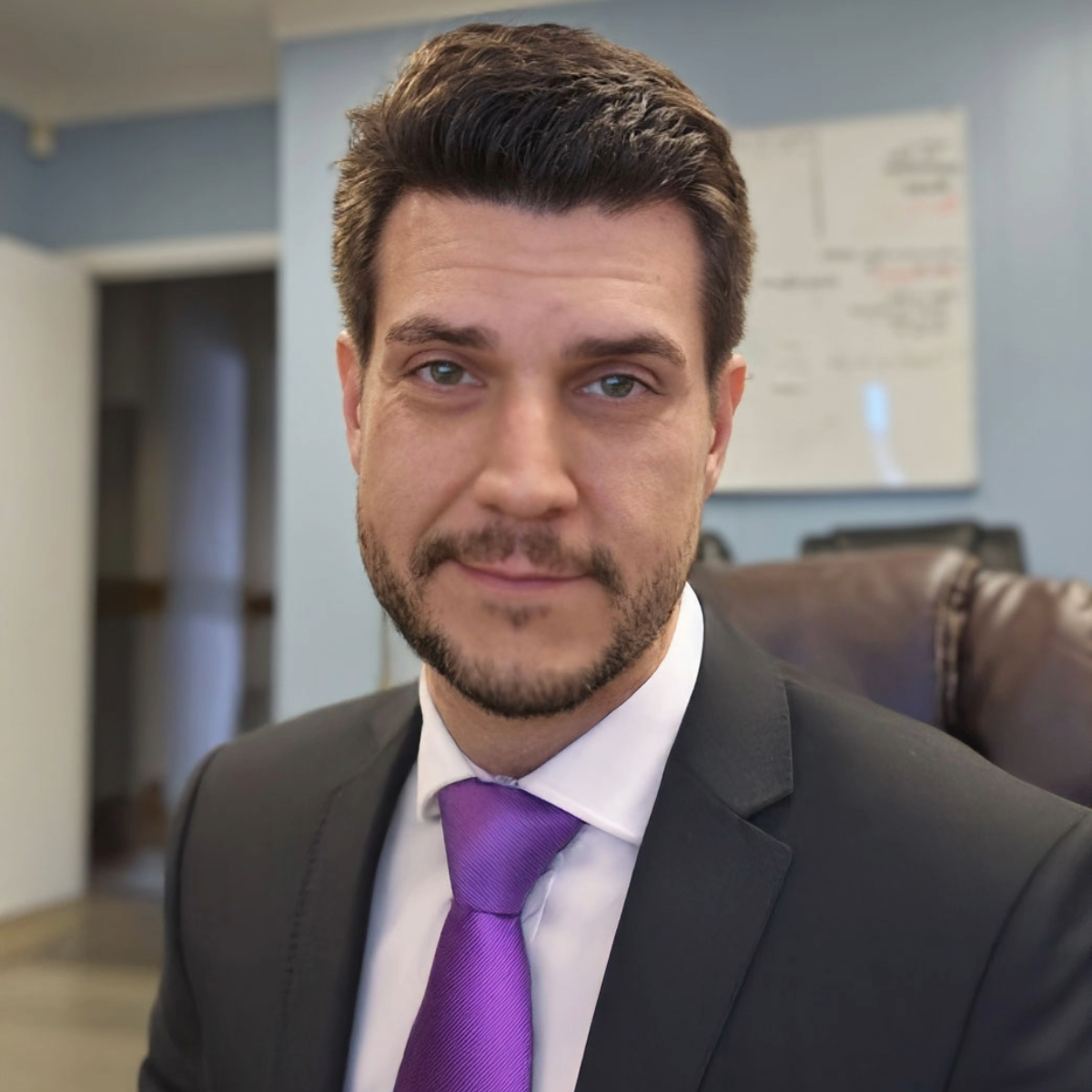
[00:00:29] Speaker A: Today we're joined by Doctor Martin Toporek. Welcome. How are you?
[00:00:33] Speaker B: Doing great, how are you?
[00:00:35] Speaker A: Doing excellent. Thank you. So tell me, what's this cool toy you have behind you on your right?
[00:00:41] Speaker B: I have the 4D Jaw Tracker. It's a computer from France, it’s called the MODJAW. So it allows me to do better dentistry. And it allows me to capture moving jaw movement while the patient's in the chair for a short period of time. 15 to 20 minutes is usually the recording. And then I'm able to have the 3D scans move and keep these recordings for helping make more accurate dentistry, and just being super cool in helping co discover with the patient.
[00:01:16] Speaker B: Patient gets to see this technology and actually what possibly is wrong with their jaw joint or with their teeth.
[00:01:25] Speaker A: That's fascinating. How has that influenced your practice? Like what were you doing prior to MODJAW, and what do you do differently now because of it?
[00:01:32] Speaker B: Well, before this, I have learned from a lot of mentors on how to use the articulators and doing everything in the lab. And this is a fully digital workflow. So this has changed the way that I do dentistry. I don't spend nearly as much time in the lab mounting models or dealing with stone cast. I spend an extreme amount of time now using the data I get from this machine and sending it into exocad, and designing everything digitally, and then 3D printing models, night guards, dentures and teeth.
[00:02:11] Speaker A: That's awesome. So you're an exocad user and strong believer in I hear like same day night guards as well, right?
[00:02:16] Speaker B: Yes. So that's probably where I focus most of my attention is doing TMJ work in cosmetic dentistry. So I love having the ability to come to work in the morning and be able to deliver Mrs. Jones's splint by 12:00 and be able to design it 3D printed in-house. Have the assistants do the workflow after I've designed it, and send it through the SprintRay ecosystem and have it all ready in about an hour.
[00:02:48] Speaker A: That's amazing. Just to be able to have that all in-house, all digital and repeatable, right? Yes. What would you say are skills that matter more in dentistry now that you have these digital tools versus tools that you had before?
[00:03:02] Speaker B: Well, one of my favorite mentors was Doctor Pete Dawson, who really found the position of the jaw and how you're supposed to use the articulator and how really to get advanced, better dentistry. And he always made a comment that nobody would mess it up faster than in the digital world. So it's very important to have those fundamental skills of dentistry before you start designing a whole smile or designing a full mouth case in exocad.
[00:03:34] Speaker B: So I think it's typical for your fundamentals and training where you've learned your dentistry. It affects everything just tremendously. But of course the technology just helps, once you have those fundamentals, make it more accurate, make it faster and make it a little bit more fun. So you still gotta have the dental experience to make it function correctly or work successfully in the mouth, but it's just such an advanced tool that allows for same day night guards, same day crowns, and multiple things that usually would take weeks if not months in dentistry, in the analog world.
[00:04:17] Speaker A: Absolutely. And I hear that you're a bit of an artist as well. Is that right?
[00:04:22] Speaker B: Yes. I've always loved art. In my office, I have my grandmother's abstract artwork all over the waiting room and in all of the operatories. So I really feel fortunate that I was handed down some artistic talent. And having a father who did dentistry for 50 years allowed me to be trained by the right people. And I'm very fortunate to have those two connections.
[00:04:51] Speaker A: So it sounds like it's been a pretty heavy influence on the way you approach dentistry in general. Is that right?
[00:04:57] Speaker B: Yes. I kind of go by on Instagram, and people call me “the Smile Artist”.
[00:05:03] Speaker A: The Smile Artist!
[00:05:05] Speaker B: That's what seems to fit my personality the best in the way that I approach dentistry, trying to make, almost like a monument, something that people will be proud of, and lasts a very long time.
[00:05:18] Speaker A: That's a good approach. A monument. It's a lifelong commitment to the artistic enhancement of somebody's smile. That's, again, the Smile Artist, I love that. So you mentioned exocad, and you touched on SprintRay a little bit. And MODJAW. Are there any other tools or tech that you use that have influenced the way you practice dentistry or things that you're looking forward to?
[00:05:40] Speaker B: Yes, I think that some of my newest workflows are some of the coolest, where I'm using the latest in 3D printing and its accuracy, and using exocad to develop a workflow that I call the Test Drive Smile. So, Smile Creator inside of exocad allows you to upload a two dimensional picture, and I can create a smile in front of the patient in less than ten minutes.
[00:06:09] Speaker B: And that has now been allowing me to start this workflow where I 3D print a “Test Drive, Smile 1”, where they get to slide it on and see what it looks like. And if they start feeling, where I'm coming from in their liking, where we're going with their new smile, sometimes we go to “Test Drive 2” where I'll get the lab involved and all of our digital technicians involved to try to come up with the closest replica we can show the patient of their final smile.
[00:06:44] Speaker B: So I like to do prep-less veneers, which are very thin, and we don't take anything away from the teeth. So this is something that when I get the 3D printed design and I actually have a model here of the patient before we started, which is very small teeth and a lot of spaces. And with the lab we came up with the “Test Drive Smile 2”.
[00:07:07] Speaker B: This is printed in SprintRay’s Apex material, and you can see it's translucent where you can see through it, and the fit and accuracy of it is amazing. Being able to slide this on the patient's teeth and give them an idea of what they want. And they're also able, without making a mess in their mouth, slide it off, take it home to their fiance or mother and show them what the Test Drive Smile looks like and what they might be getting in their final smile.
[00:07:40] Speaker B: So the final smile for this young girl was ten feldspathic prep-less veneers that we didn't use any anesthetic or any drills during the process.
[00:07:51] Speaker A: That's incredible. I mean, seeing is believing, but having it in your hand and being able to take it home. I love the term “Test Drive Smile”.
[00:07:58] Speaker B: Yes.
[00:07:59] Speaker A: That's a pretty good one. What about that has become- So how did you take that from a cool trick to a scalable workflow? And how do you incorporate that into your daily treatment?
[00:08:11] Speaker B: It took a little bit of trial and error, especially with the first printers and some of my first designs. But after learning some of the tricks from, lab people at Evolve labs, some of the trainers, and trial and error, I found that the newest printers are so accurate that we're printing at 0.3 millimeters and making them super thin, and it slides on the teeth just with simplicity, and you're not having to make a real mess in the patient's mouth to give them a mock up.
[00:08:45] Speaker A: It's pretty impressive the advancements we've had with 3D printing. Like, it seems like the printers jump ahead and then the materials jump back, and then the printers jump ahead again, and then the materials catch up again. So you said that this has become a scalable workflow that you've incorporated into, like basically every consultation or is this specific to certain patients?
[00:09:07] Speaker B: Usually for the smile consultations, somebody that's looking for a new smile. But it also comes in real handy when the patient needs their bite opened or if they have a canted smile. Being able to use this workflow and slide something over their teeth to show them how crooked their smile was and how it really should be lined up.
[00:09:30] Speaker A: That's awesome. And so how have you incorporated your staff into this process?
[00:09:36] Speaker B: Well, they just love being involved because this process involves taking pictures. So they're usually helping and taking the pictures and the program on exocad, the Smile Creator, is so simple that the assistant can even help run it or show it to the patient, and it gives such a detailed report. It's very easy to review with the patient and show them in color pictures what the Test Drive Smile looks like.
[00:10:04] Speaker A: That's excellent. What about the pictures have you discovered that it works better versus other strategies?
[00:10:12] Speaker B: I feel that when you do digital photography that it's the only way to do it, because they really need to be able to see their teeth on a TV screen. It needs to be blown up ten times the size of a natural tooth, just so that they can see and understand what you're talking about when you’re referring to shapes and differences in color and sizes and things like that.
[00:10:38] Speaker A: That's cool, so how long have you been doing this with the Test Drive Smiles?
[00:10:43] Speaker B: Well, I've been using these, slide-on 3D printed smiles for probably three years now, but I've only been, for the last six months doing it where I get the final lab to help me with the final 3D print. So it usually involves a two stage 3D print, the first one for this patient, I just did six teeth to kind of sell the case, and then we did the ten, 3D printed off of the final design to really give the patient a look of what they were going to get.
[00:11:18] Speaker B: So the final, almost sign off, it also gave me the opportunity to print it in the Apex resin, which is translucent, and also the On X Tough 2 resin, which we use a lot for veneers, bridges and all on 4’s. And the Apex is mostly used for denture teeth, but they have different opacities being the On X Tough being very opaque, and it can mask color, whereas the Apex is translucent and will show underlying color for a better natural effect.
[00:11:54] Speaker B: So this allowed me to show her what really Hollywood white looks like compared to a more natural color of the teeth I just showed you earlier.
[00:12:04] Speaker A: Right.
[00:12:05] Speaker B: So let's get a color discussion going before the finals come back, or a shade.
[00:12:12] Speaker A: Absolutely! That's one of the coolest things it seems about the tech is that it can help you find that middle ground between what's possible and the patient's expectations. You know what they think it's going to look like versus yeah, sorry.
[00:12:25] Speaker B: And sometimes they don't use it for making final veneers. But that's what it seems like it's helped a lot with is the ability to print two copies in two different colors, or two different materials, to try to explain to the patient the difference in opacities or translucency, or even what too white looks like.
[00:12:47] Speaker A: Yeah, “too white” is such a ubiquitous problem among patient expectations. I've seen so many examples of treatment regrets later on, where it's like the blinding white smile that they did not expect to turn out that way. So it sounds like you've been on the forefront of a lot of this tech, for several years.
[00:13:07] Speaker A: What signals to you that it's that some of this technology is ready for the real world versus still in the experimental phase?
[00:13:16] Speaker B: I think, some of the materials just haven't fully been tested, or they fully haven't survived that full test that we compare to a full gold crown which has been around, you know, now almost 100 years. And that is something that's just going to take time and it's going to take the advancement of the technology, and it's going to take the clinicians really, trying it in the mouth and seeing how well it lasts and how well it performs.
[00:13:47] Speaker A: Has that been your experience? You try it and see if it flies, and if it doesn't, you pull back or?
[00:13:52] Speaker B: Yeah, unfortunately that seems like the name of the game with all of this technology. It’s coming out so fast that some of it's great and you try and you love it, and some of it maybe is not as perfect as the old school way, and it takes version two or version three to really get it there.
[00:14:15] Speaker A: Right. Yeah, that makes a lot of sense. But it sounds like you're already incorporating a direct 3D printed final, am I hearing correctly there?
[00:14:25] Speaker B: Yes, I do, do some finals, and a lot that I've been doing lately have been with SprintRay's newest printer, which is the stereolith-press printer called the Midas. And so the Midas uses a capsule with a higher percentage of glass particles in it, so that it is stronger and has more of a final crown properties. So it's been performing well, and the printer is very accurate.
[00:14:52] Speaker B: I’ve been having a lot of fun printing inlays, onlays, and veneers in less than nine minutes. And it's just an extra tool in my arsenal of dentistry, and helping someone smile.
[00:15:10] Speaker A: Yeah, that makes a lot of sense. It’s a very impressive little printer and it’s a tiny little footprint too.
[00:15:17] Speaker B: Right. It's right behind me on this computer. It sits on my conference desk so it doesn't sit in the back where all of the messy lab printers are. This is kind of the “show printer”, I call it, because it's so advanced, but yet so simple, with just one press arm that does all the work.
[00:15:35] Speaker A: Well it is, it's impressive and it's a looker. What gives you the confidence to move into this tech? Like a lot of doctors are really afraid to be on the “bleeding edge”, as they say, and they're trying to stay on the “leading edge”, they're afraid of getting burned. Like, what gives you the confidence to push the envelope of the technology and what can be done?
[00:15:54] Speaker B: I think it's my understanding of the fundamentals of dentistry, knowing when to use it and when not to use it, and knowing when it's a good patient that it should perform well, or one where it's not a fully permanent situation, but it only might be a few months. It's always a good situation to try some of these materials and see how it does on an interim basis first.
[00:16:19] Speaker B: So… a lot of fun just using new technology, and especially when speed comes into play and accuracy.
[00:16:33] Speaker A: Abs- Yeah, absolutely. And I mean, personally, I'm a big nerd. I love tech. That's what really brought me into this industry in the first place. So I can relate to that wholeheartedly. So it sounds like, sounds like you really believe in the digital workflow. For somebody who is kind of on the edge and just entering into this, what would you say to them?
[00:16:52] Speaker B: I would say it would be silly not to. Seems like everyone, especially at the start of this year, is jumping on the bandwagon, but it's kind of like 3D scanning. I don't see why you would want to stay with taking goopy molds. The 3D printing, as we've talked about, gives us accuracy and it gives me that love of speed, meaning I can do it the same day the patient's coming.
[00:17:18] Speaker B: I can do it overnight, and I have full control Knowing what I'm delivering in an hour or the next day is going to be what I want. I'm not waiting two weeks to open the box and see something that I might not like, and not have the time to send it back. So even if the 3D print doesn't turn out the way I wanted to, I still have the ability to redesign it, remake it, re print it, print it in three different materials, and have three veneers ready for when the patient shows up.
[00:17:52] Speaker B: So that ability is priceless in my daily workflows now. I couldn't go back to not 3D printing. So at the office right now I have four SprintRay printers, most of them are used on a daily basis.
[00:18:07] Speaker A: Four SprintRay printers, does that include your Midas? Or is that-
[00:18:10] Speaker B: Yeah. That's included, but.
[00:18:11] Speaker A: That’s including the Midas. But still, that's a lot of 3D printing happening simultaneously. So how have you incorporated your staff into working those? Right. Because I'm assuming you're not sitting at every single printer. You're probably chairside, doing some consultations. Right.
[00:18:25] Speaker B: And it used to involve a lot more training of the staff, but as the technology or AI technology advances with these companies that do 3D printing and scanning, my 3Shape computer now makes a model in less than 30 seconds with the date and the patient's name hollowed out with notches, where it would have taken me at least ten minutes in exocad to do that.
[00:18:52] Speaker B: And my assistant can do it in 30 seconds after scanning the patient and send it through the cloud to SprintRay and have the model printed in five minutes after the patient's there. So it's amazing that I don't have to be involved with some of those steps anymore. And then they can take the post-processing part no problem with washing and curing the models, or the crowns or dentures.
[00:19:19] Speaker A: So it sounds like the AI has helped you a lot. Are there any other ways that you've incorporated AI into your practice?
[00:19:24] Speaker B: I think just basically with exocad and with SprintRay using some of their AI crown designs and the inlay designs where it's a little bit more simple. I don’t use it too much for a night guard where I want to dial things in a little bit more. But if it's a simple just posterior crown, the AI just does a wonderful job of matching the anatomy and getting it pretty close in such a short 10 second, 30 second amount of time.
[00:19:54] Speaker A: So what would you say would be a good way to step into this if somebody hasn't already? Like say you have a doctor who has a 3D- or intraoral scanner, but they're not really sure about, let’s say, getting into 3D printing or doing same day, noninvasive restorations like, same day, veneers, you know, or 3D printing in general. How would you recommend they approach something like that?
[00:20:24] Speaker B: I think they just have to jump two feet in. Most practices in the country have CEREC machines, which cost ten times as much as a 3D printing machine or set up or ecosystem. And so it's not the biggest cost in the world. It just takes a little bit of time and effort from the doctor to learn how to use the iPhone, or learn how to use the new equipment that they have.
[00:20:53] Speaker B: But once they have it, it gives you so much ability to be able to make retainers, to be able to make night guards, to be able to print the smile designs that you want to do. That's your return on investment, it’s so good that it would be silly not to do it. That 3D printing just saves you having to mail or something not coming back on time. And it doesn't necessarily have to replace your whole lab, but gives you ability to be more creative and get stuff done faster.
[00:21:28] Speaker A: You truly get to see the results of your work, almost in real time then!
[00:21:32] Speaker B: Yes, and that always when you're working on it yourself, you learn as you're working on it. So if you're making the patient their night guard or even their retainer, you start to realize, wow, that one tooth is out of whack, or that tooth seems funny, or possibly might be biting incorrectly. And we possibly need to adjust that, because in making this night guard, it's the one that I'm always finding the problem with.
[00:21:59] Speaker B: So it helps you learn about the patient without the patient being there, because you're working with some of the information you gathered, instead of a lab man in another state doing your work.
[00:22:12] Speaker A: So you find that it helps you and your staff connect with the patients a little bit more directly then.
[00:22:17] Speaker B: Correct. And especially like the MODJAW computer behind me, it helps the computer see their mouth or see the diagnosis that I'm making right on the screen. So it's much easier for me to explain it. And like I said before, when they see their teeth ten times bigger than it normally is, it helps them visualize what's going on better.
[00:22:43] Speaker A: Do you have any other stories involving some of the no prep veneer cases you've delivered recently?
[00:22:49] Speaker B: Yes. I had a young girl recently that had an extreme amount of wear on her teeth, and her front two teeth were very, crossed and very overlapping. So one was more facial or more pronounced than the other. And she was not interested at all in going through orthodontia or braces. And so we were able to 3D printer her a ten tooth slip-on Trial Smile for her not only to show her boyfriend, but to actually bond in there, and wear to test out her pair of functions to see if she would chip the 3D printed version of her smile.
[00:23:35] Speaker B: We were wanting to deliver so fast and without doing any harm to her teeth. This gave us a test drive into seeing if she would chip or wear the 3D printed material. And after a month of no problems, we have now stepped up to the emax veneers and we have no prep, bonded them on. And she is very happy, we’ve 3D printed a night guard, which I always do for these cases for her to sleep in.
[00:24:07] Speaker B: And we haven't had any issues. So she was one of my most recent test drive patients where we did ten prep-less veneers to do “instant orthodontics” I call it… better function so that the teeth were touching better in the right shape and size, which always when you get the function better the form follows. So it always looks good in the end when you get the function fixed.
[00:24:37] Speaker A: Do you find you’re incorporating more orthodontic or less orthodontic work? Now that you've gone more digital with all this, with all these techniques.
[00:24:44] Speaker B:I think it's case-dependent, but I still do a lot of limited Invisalign, SureSmile type aligners where we're doing small movements so that I can be more prep-less. So if I can intrude a tooth a little more, or tip it a little lingual.
[00:25:06] Speaker A: That's pretty fascinating. You're able to take two teeth that far, kind of inclined from each other, and bring them into sort of a quasi-orthodontic solution with just prep less veneers. That's pretty impressive.
[00:25:19] Speaker B: It's pretty cool. So I do a lot of injection molding, too. It's kind of similar like that where there's no tooth and I don't prep it at all. And just design it digitally and then make the clear matrix and squirt the flowable composite basically in there. But that's the type of thing where it's very messy when you do a case like that and you have to have really good artistic talent.
[00:25:45] Speaker A: So, yeah. So… for doing things like a composite matrix you're using, say, an exocad mock up design and then 3D printing a model?
[00:25:52] Speaker B: Yes. So one of the favorite techniques that I like to use, for digital workflows, is an injection mold technique. It's mostly used for the digital workflow area because you have to have one model of the final wax up of the teeth, and then you also have to have almost every other tooth model.
[00:26:15] Speaker B: And so this would take a long time to wax up fully and then also wax up identically to every other tooth. But digitally it's very easy to extract the teeth, every other one for making a model. In this technique, it allows me to do six veneers in the front or 17 units in the mouth in a very short amount of time, usually with no anesthetic or in very limited prepping.
[00:26:44] Speaker B: And we do it in a two technique, two-step technique where I make clear matrices on every other tooth model and the full wax up model. We have to isolate the teeth we don't want to bond to and use the first every other tooth model to bond flowable resin made by GC America called G-ænial™. And it's a space age flowable resin that's been holding up and very easy to work with. The polish ability in the look is very natural. So I've really liked using this product. And, once you've got the first set of teeth with that and you've lengthened every other tooth, you have to polish it up and put Teflon tape on all the other, isolate the teeth you've already bonded to and put the final wax up clear matrix in and inject the resin into the teeth you have not bonded to yet.
[00:27:44] Speaker B: So it's a multi-step technique, but it allows you to do multiple teeth in a short two-hour appointment. And I can do six veneers and they aren’t bonded together and I'm able to floss them afterwards.
[00:28:02] Speaker A: That's cool. I hadn't really heard of that technique before with every other tooth model. That's a really great way to isolate the individual units though. Using Teflon tape to separate them to fill in the rest.
[00:28:16] Speaker B: Yeah. And so then some of the flash or the overflow goes over the Teflon tape in the opposing teeth. And it's very easy to clean up with esthetic trimming burrs and scalpel blades and scalers. And then- the second step, you just isolate the other teeth and bond to the ones you haven’t bonded to yet.
[00:28:39] Speaker A: That's really cool. How did you come up with that technique?
[00:28:42] Speaker B: That's a technique that some dentists have been using now for probably 5 to 7 years, I would say. And it's just gotten more popular as more people get into 3D printing and especially learning exocad design techniques. So it's one of my favorite things to use in the office. Especially for an extreme wear case where the patient's not sure if they want to do a full mouth reconstruction, and we can segregate it into pieces of maybe ceramics on the upper front teeth, but using injection mold on the posterior teeth, on the occlusion to help open the bite or fix their extreme wear or erosion.
[00:29:32] Speaker A: That's really neat. Yeah. That sounds like a great way to isolate the work. The tools within exocad definitely, it seems like, make that a lot easier to accomplish too, especially a traditional waxing.
[00:29:46] Speaker B: Even one of my favorite cases that we've done to date, using this injection mold technique, we use my computer in the back, the MODJAW, and I use Jonny Jackson from Evolve to help me design 17 teeth that we did in 3.5 hours doing the injection mold. So using Jonny, he was able to help me design the teeth with the patient’s specific teeth movements from the MODJAW incorporated.
[00:30:15] Speaker B: So the patient’s had this work in their mouth for over two years, and it hasn't chipped or caused the patient any problems. So it's a really amazing feat seeing the wear and erosion that this patient had to start with.
[00:30:34] Speaker A: And then to reverse that entirely with, with just some flowable composite, right?
[00:30:35] Speaker B: Correct. Yes, it’s amazing.
[00:30:38] Speaker A: Have you standardized this workflow with your staff? And, how have you incorporated some of these other workflows into, like, just your daily work? How do you go about diagnosing some of these and then going forward with treating them?
[00:30:52] Speaker B: Well I always make sure when I have a new patient that I do an extensive comprehensive exam, and we always scan the patients and usually bring them back for a console. So this gives me the opportunity to feel the patient out and see what they're looking for. Are they looking for a long term fix? Are they looking for something that's going to get them by, and how they can take steps to getting their mouth into a better, healthier position?
[00:31:20] Speaker B: So it's really me building a relationship with the patient that helps me decide what type of dentistry I'm going to use, and the digital world and all of this technology just allows me to give them more options and sometimes even better price categories.
[00:31:39] Speaker A: Sounds like a great way to build, patient loyalty as well.
[00:31:43] Speaker B: Yes, they seem thrilled to see that I've taken the time to learn this technology, to spend the money on advanced technology to help fix their mouths. They can tell I'm not trying to cut a corner. They can tell that I care, and I want the best for them.
[00:32:04] Speaker A: Right. Absolutely. And the technology is not at all on its own there. Like you were saying there, it's not just the tech. You can spend money on tech and still not get anywhere. Kind of comes back to the beginning of the conversation where, the experience feeds the technology, the experience drives the outcome.
[00:32:22] Speaker B: Correct. So I like the technology and I actually like teaching some of this stuff because I think it's so valuable and can be so helpful for a young dentist or even a dentist that's been practicing a long time to get into the digital world. Just so they can see things better, the patient can see things better, and it can just make it a little more exciting around the office for the staff and for the doctor.
[00:32:51] Speaker B: I was always taught when I first started that if you felt that whatever you were purchasing for your dental practice would make you like coming to the office more, then you should definitely buy it. So these computers definitely give me a second wind or inspiration to learn. And it's exciting.
[00:33:13] Speaker A: I love that! That sounds like solid advice. And you lecture on some of this, right?
[00:33:18] Speaker B: Yes. So I like speaking on 3D printing, doing the Smile Creator on exocad, and the MODJAW.
[00:33:28] Speaker A: That's so cool man. Like you said, if a piece of technology can make you want to come, makes people more enthusiastic about coming into the office, then you should buy it. Right?
[00:33:42] Speaker B: Right. This is like what we talked about, it’s not nearly as expensive as a CEREC machine. And some people have asked me why I bought the MODJAW Jaw Tracker because it doesn't make a crown, or it doesn't make you exactly money, but it interests me. It wows me, it wow’s the patient. And like I said at the beginning, I think it helps me do better dentistry.
[00:34:06] Speaker A: And you're one of the few adopters of the MODJAW in the United States. It's a pretty exclusive little club right now, isn’t it?
[00:34:12] Speaker B: I think I'm one of the pioneers, only just because people haven't spent the time to learn about it or, haven't sought out the interest of finding a jaw tracker, but fell right in my lap of being something that I work with every day. Being TMJ patients, bite splints, opening the bite for major cases of reconstruction, and anything to help make that type of dentistry more accurate, I want to have in my office.
[00:34:55] Speaker A: Yeah, I'm sure it's got to be very helpful for TMJ patients, especially.
[00:34:50] Speaker A: At this point, we did lose connection with our guest today due to weather, but a huge thank you to Doctor Martin Toporek for joining us. You can keep up with him on Instagram and Facebook, @doctor_MartinToporek, and check out his practice West Ashley Dental Associates at tdental.net.
[00:35:08] Speaker A: Thanks so much for tuning in to this episode of the Evolution of Dental Podcast, brought to you by Evolution Dental Science. Please look for new episodes every Friday on all your favorite podcast streaming platforms. Remember to like, share and subscribe, and never stop evolving.